
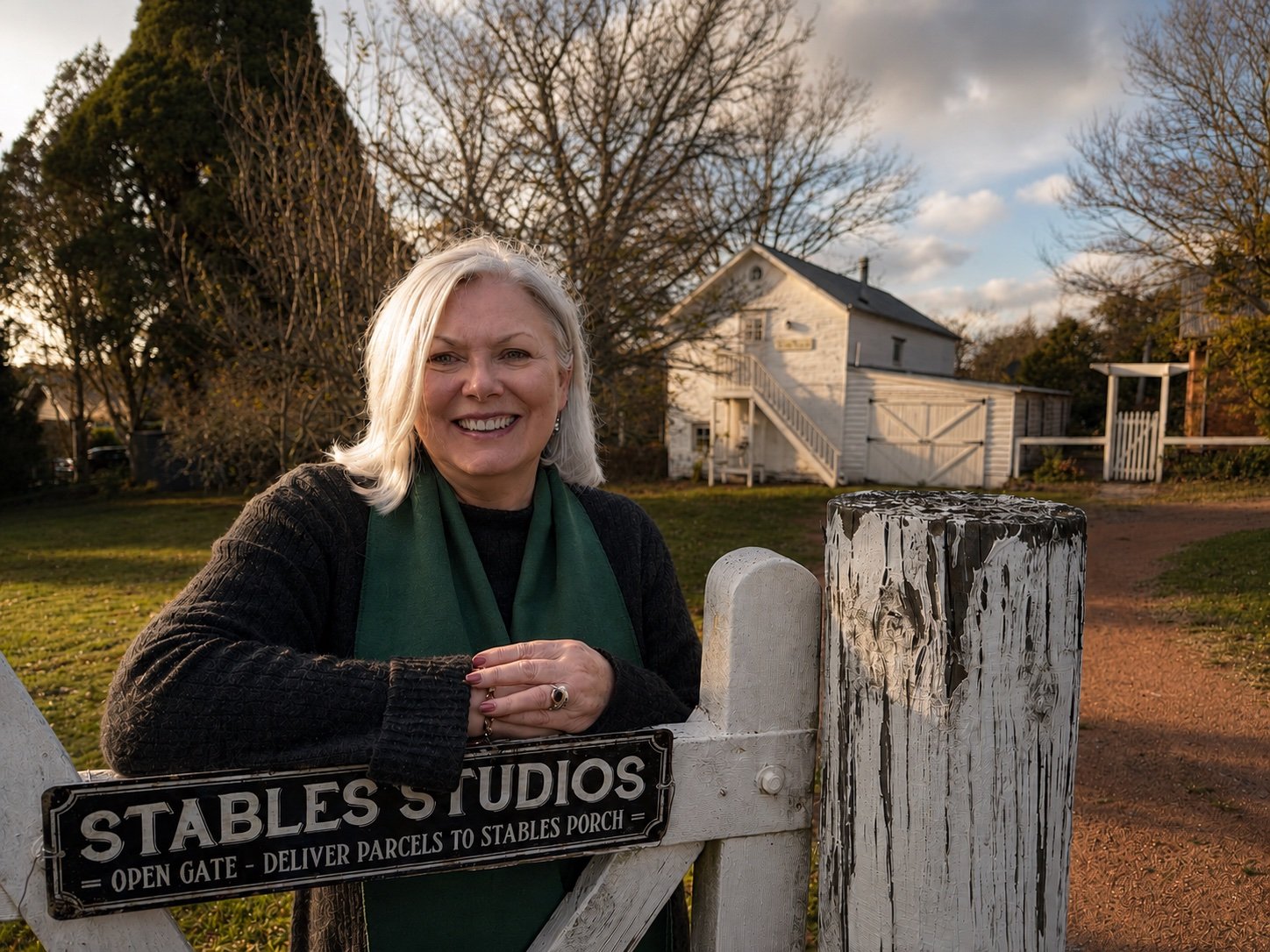
The Stables: A Place for Making
There are some places that seem to carry their own creative energy.
Since moving into my studio at The Stables, 62 Church Road, Moss Vale, I’ve become increasingly fascinated by the history held within these old walls.
I knew I was moving into a beautiful historic building, but I didn't quite realise at first that I was stepping into a story that reaches back more than two hundred years — a story of exploration, farming, horses, workers, families, artists and makers.
And the more I discover, the more connected I feel to it.
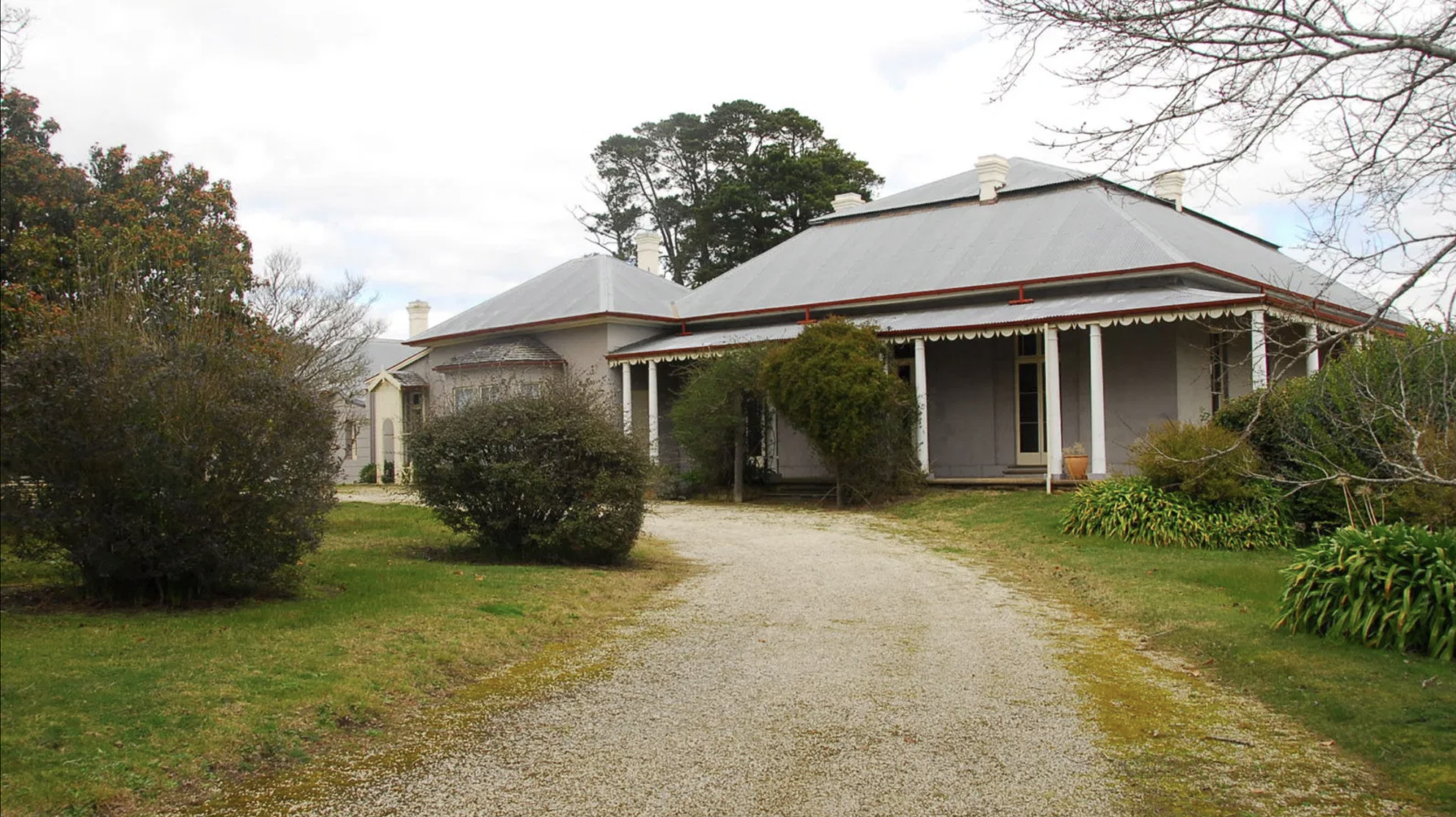
Throsby Park prior to being repainted, 2011. Richard Taylor
Throsby Park
Throsby Park sits just east of Moss Vale and is one of the Southern Highlands' most important historic landscapes.
The story begins in 1819, when Governor Lachlan Macquarie granted Dr Charles Throsby approximately 1,000 acres of land. Throsby was a surgeon, explorer, pastoralist and magistrate whose explorations helped open routes through the Southern Highlands and towards the Illawarra. The surviving historic property today encompasses around 74 hectares of that original estate.¹
The first years were very different from the peaceful rural landscape we see today.
This was a working colonial farm.
Dr Throsby had no children, and the estate eventually passed to his nephew, also named Charles Throsby. It was the younger Charles who developed Throsby Park into a substantial pastoral and agricultural enterprise and built the grand homestead in the 1830s.
The house was completed around 1836, but the story of the estate is much bigger than the house itself.
The surviving landscape contains traces of an entire working farm — stables, horse yards, dairy buildings, a hayshed, orchard, piggery, sheep dip, meat house, quarry, roads, dams and archaeological remains associated with convict accommodation. Heritage records identify 43 significant elements across the historic site.²
I find that extraordinary.
Because it reminds us that these places weren't simply grand country houses.
They were workplaces.
People lived here. People worked here. Horses were cared for here. Food was produced here. Things were repaired, built, carried and made here.
And many of the people who made the estate function have disappeared from the popular version of its history.
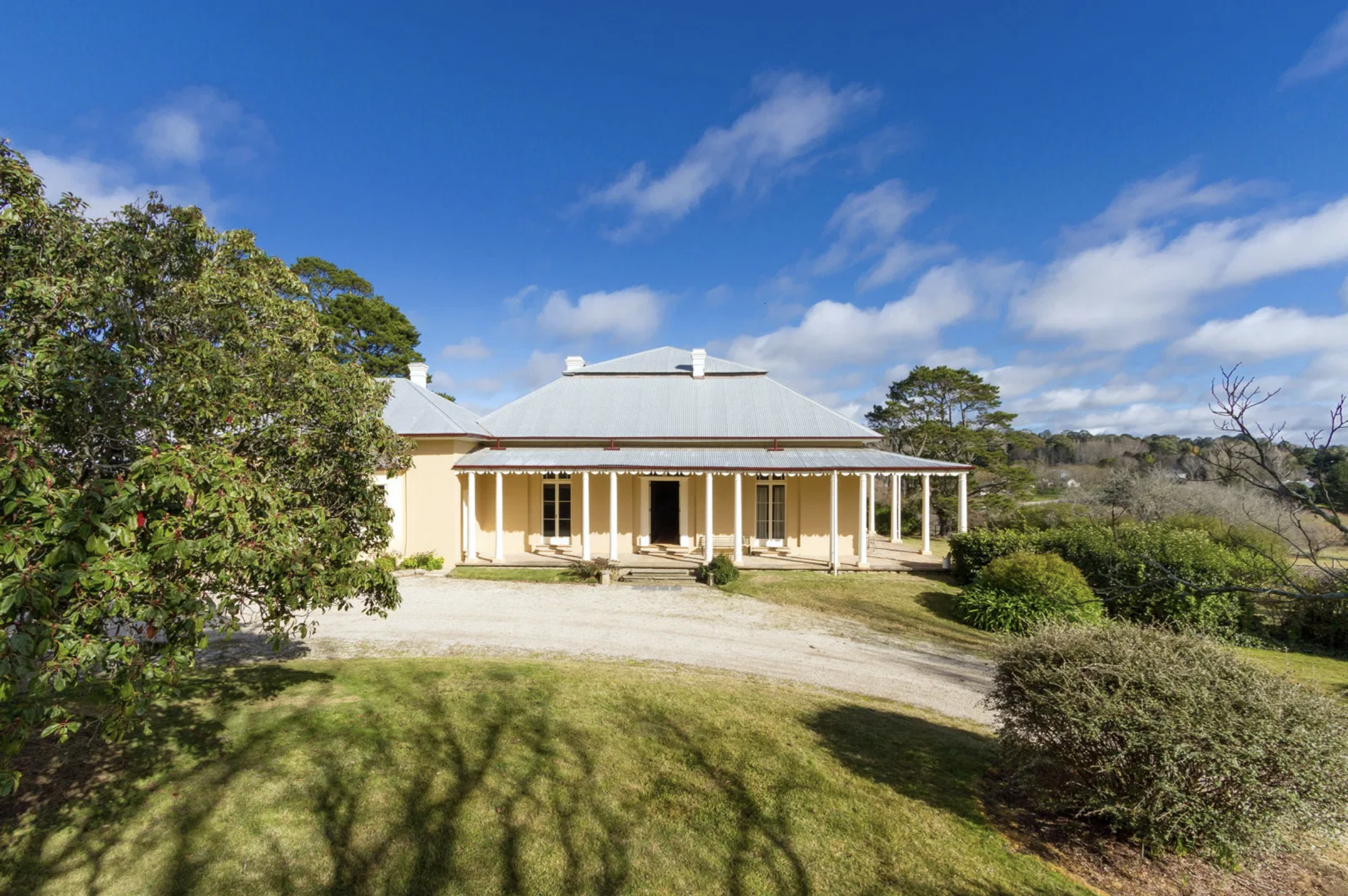
View of Throsby Park house and circular drive
Throsby Park, Museums of History NSW, Photograph. Doug Riley
The people behind the place
By 1828, around thirty people were working on the Throsby estate, including labourers, stockmen, shepherds, gardeners, fencers and other workers, alongside assigned convicts. By 1841, the workforce had grown to around fifty.³
I often find myself wondering about them.
Who slept in these buildings?
Who rose before dawn?
Who groomed the horses?
Who carried water?
Who repaired a fence or mended a harness?
Who came back tired at the end of the day?
There is something about working in an old building that makes you aware of all the hands that have gone before you.
And perhaps that's one of the reasons I love working here.
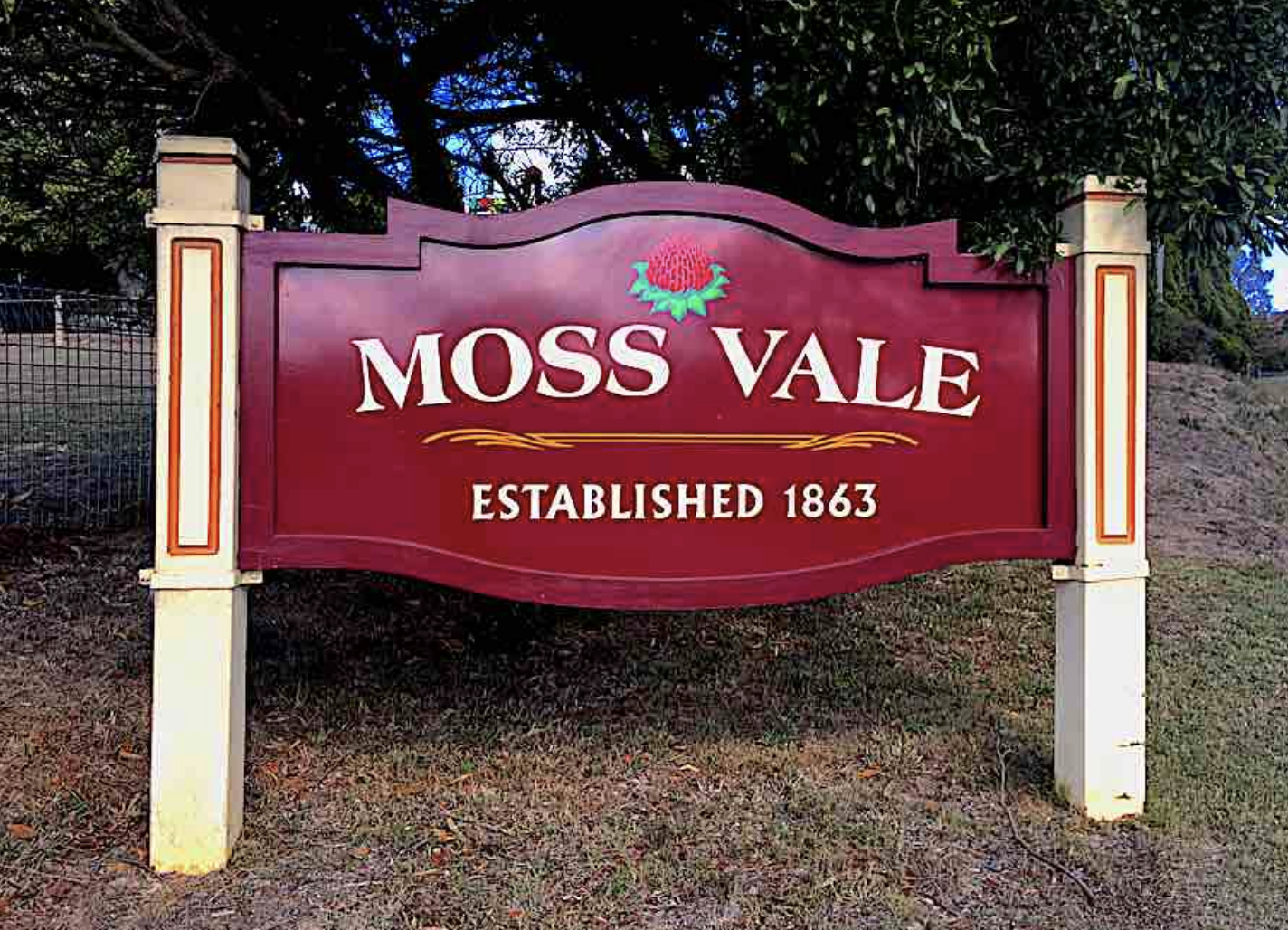
The place that became Moss Vale
Throsby Park isn't simply close to Moss Vale.
It is part of the story of how Moss Vale came into being.
When the railway arrived in the 1860s, part of the Throsby estate was subdivided. The railway station opened in December 1867 and helped establish Moss Vale as an important centre for the surrounding agricultural district.⁴
And the name itself has a wonderful human story.
Moss Vale is named after Jemmy Moss, an ex-convict who became a valued employee of the Throsby family. He lived in a hut on Throsby land in what is now the Spring Street area.
It is rather remarkable to think that the name of the town where I now have my studio comes from a man who was once part of the Throsby Park community.
The history of the estate isn't separate from the history of Moss Vale.
It is woven into it.
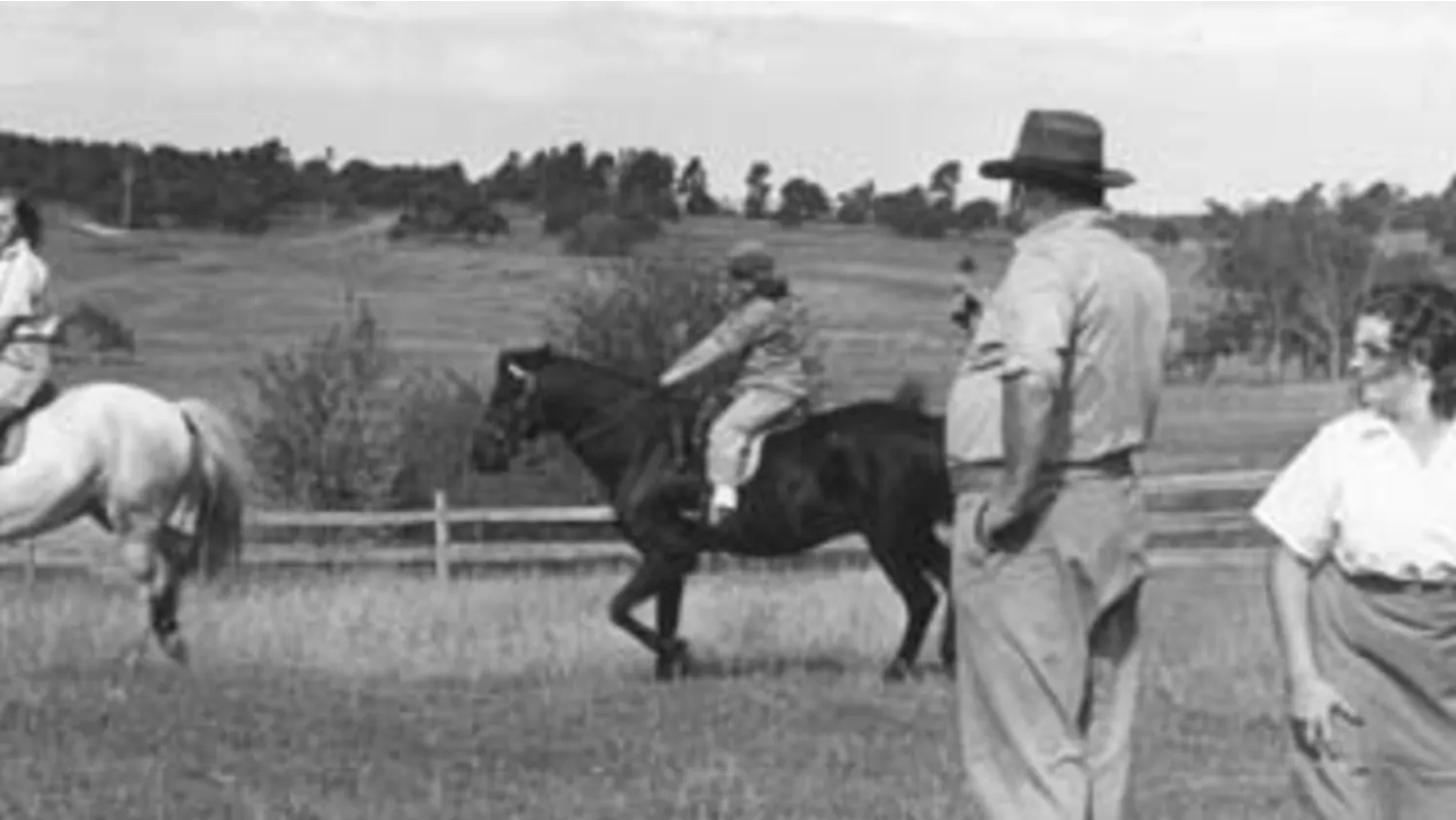
Training for the 1948 Royal Easter Show ... Del Throsby, Betty Ash, Noni, Frank and Jill Throsby. Historic Houses Trust.
A place for horses
Throsby Park later developed another important identity — horses.
A riding school and guesthouse operated at the property from the 1930s, and during school holidays there could be as many as 35 children staying at Throsby Park, learning to ride and care for horses. Generations of young people passed through the property.⁵
The Stables were part of this continuing life with horses.
So when I walk into my studio each morning, I am conscious that this building has had a purpose long before I arrived.
It was never simply decorative.
It was a place of activity.
A place of work.
A place where something was always happening.
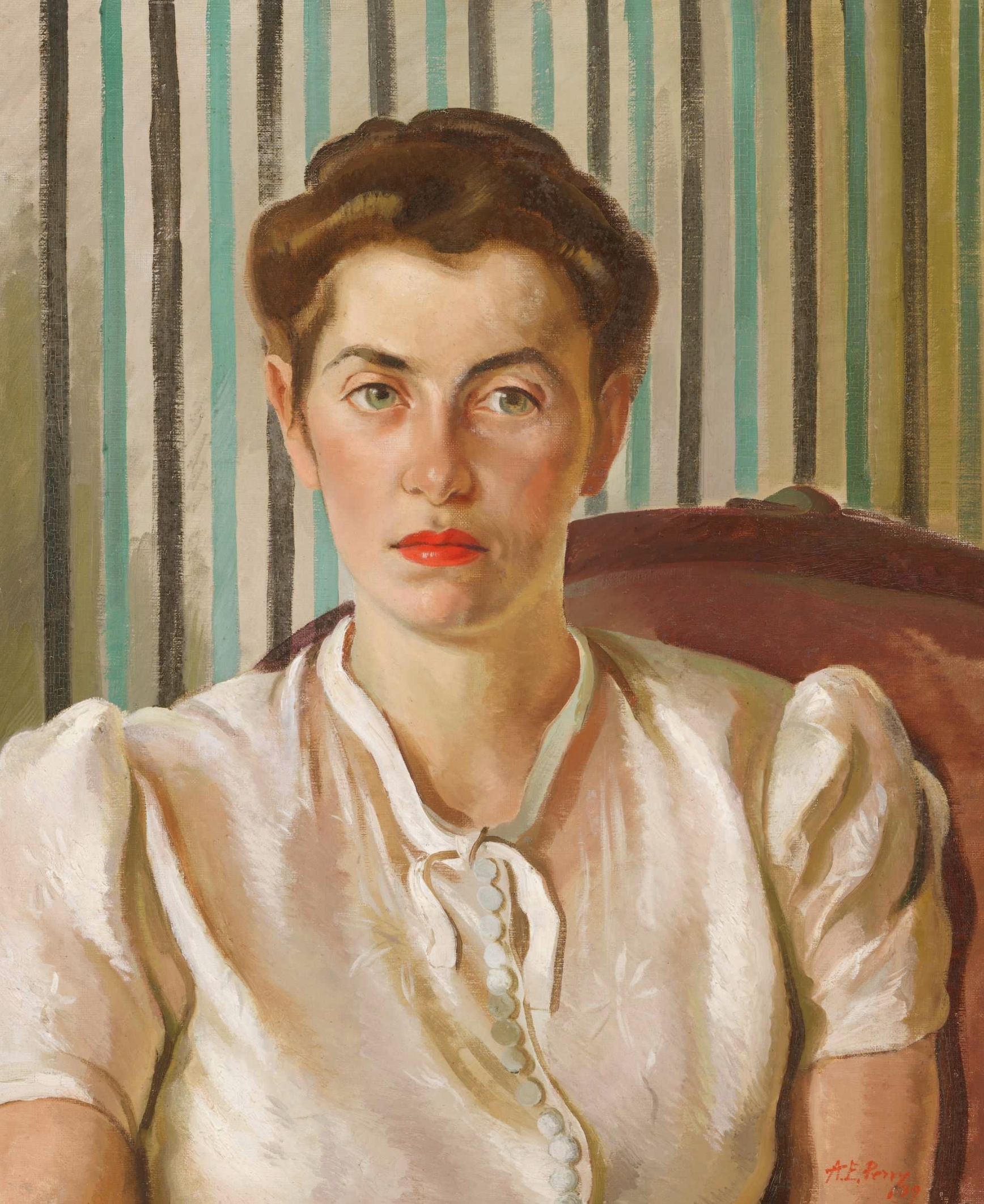
Rachel Roxburgh, 1939 by Adelaide Perry, oil on canvas (frame: 77.0 cm x 67.0 cm, support: 61.0 cm x 51.0 cm) National Portrait Gallery.
And then an artist arrived
In 1968, another chapter began.
Rachel Roxburgh — artist, potter, architectural historian and conservationist — came to Throsby Park.
Rachel lived in the old Barn and used the Stables for her pottery kiln. She spent years throwing and firing pottery here.⁶
I love this part of the story.
Because Rachel wasn't simply an artist who happened to live in an old building.
She became deeply involved in understanding and preserving Australia's early architecture. She researched Throsby Park extensively and eventually published her history of the Throsby family and the property.
She understood that buildings carry stories.
She understood that the ordinary structures around a grand house can be just as important as the house itself.
And now, more than half a century later, another woman artist is working in the Stables.
Me.
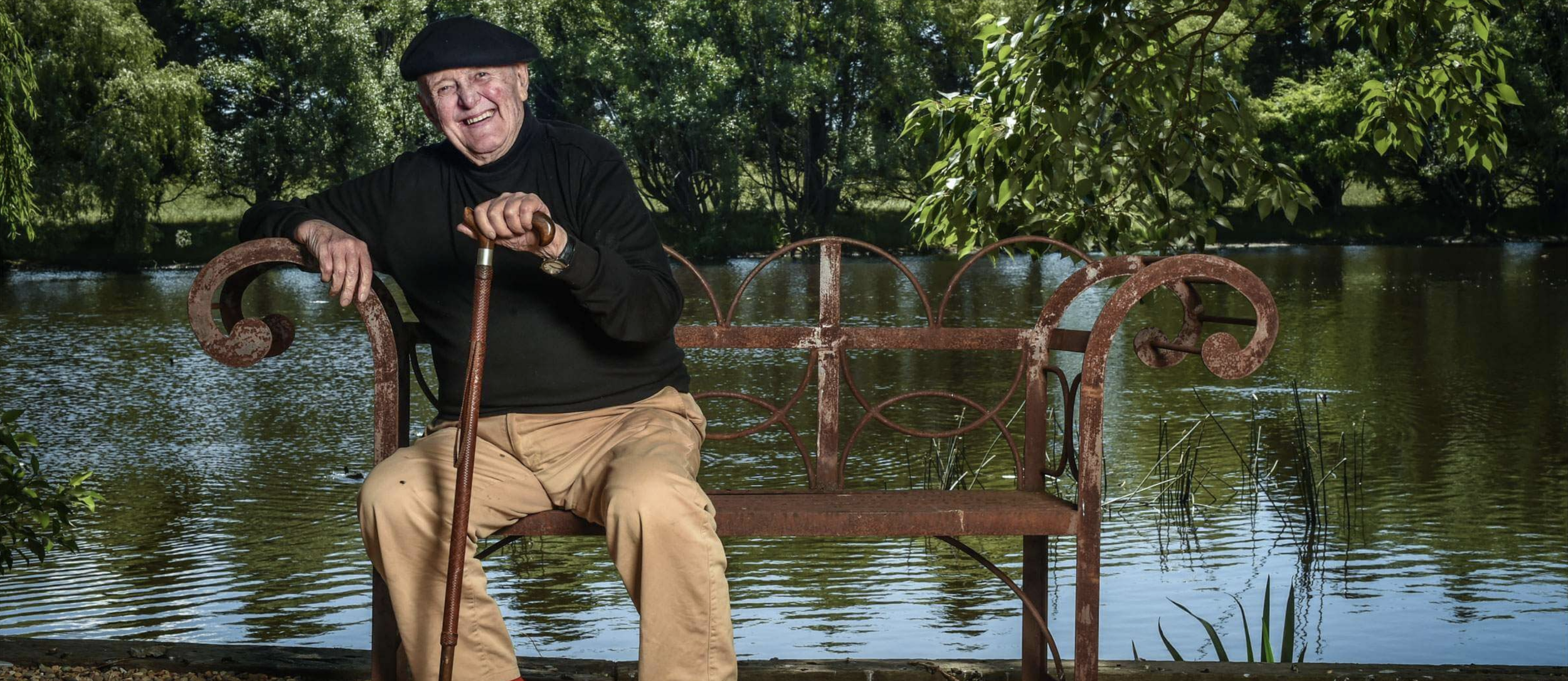
John Olsen at home in the NSW Southern Highlands in 2015. Brendan Esposito
There is another intriguing artistic connection.
The historic property known as Barnham Stables was later owned by celebrated Australian artist John Olsen and his wife, Katherine, before it was purchased by Tim Throsby, a descendant of the original Throsby family, in 2007.⁷
I don't yet know exactly how John and Katherine used the buildings, or whether John ever painted inside these particular walls.
That is something I would love to discover.
But I like the fact that artists have become part of the story of this little place.
Rachel made pottery here.
John Olsen was later associated with the property.
And now I make paintings here.
Rachel. John. And now me.
Three artists.
Three very different lives.
Three very different ways of seeing the world.
And yet perhaps the thread is simply this:
make something.
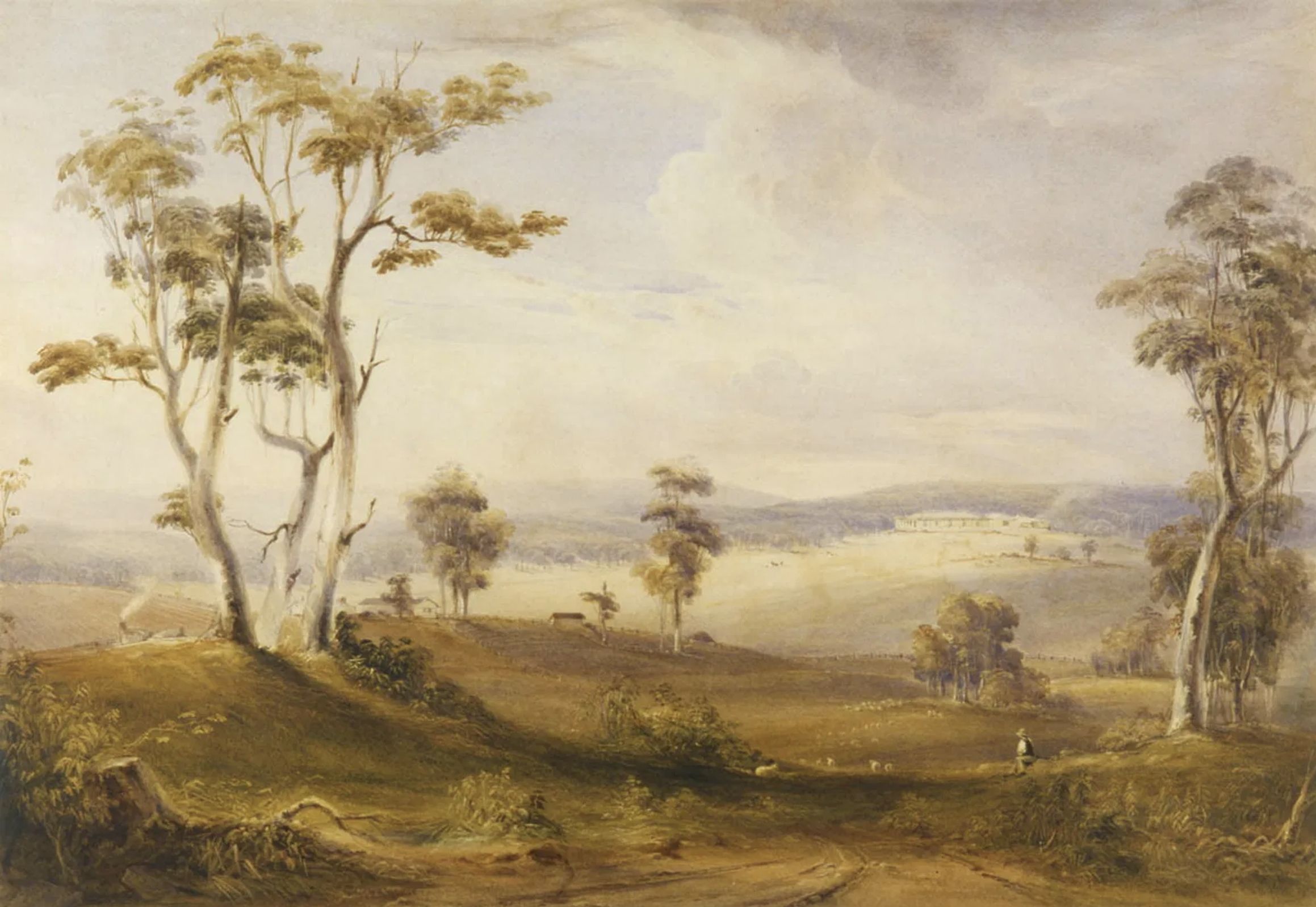
View of Throsby Park by Conrad Martens, c1836.
Even the landscape has been painted
There is another lovely connection for me as a painter.
In 1836, Conrad Martens painted Throsby Park.⁸
Martens was one of the earliest professional artists to establish himself permanently in Australia, and he made a living largely through commissions depicting the Australian landscape and the properties of colonial families.⁹
His view of Throsby Park gives us a glimpse of the landscape more than 180 years ago.
I sometimes think about that when I'm painting here.
The view has changed.
The trees have changed.
The buildings have changed.
The people have changed.
But the landscape is still here.
And an artist is still looking at it.

My beloved studio space at Throsby Park.
We don't really start again
This is perhaps the part of the story that feels most personal to me.
I came to painting after around forty years working in theatre and costume design.
For decades I worked with fabric, colour, pattern, texture, form and storytelling.
When I eventually left theatre and began painting, it might have looked from the outside as though I was starting again.
But I don't think we ever really start again.
We bring everything with us.
Every experience.
Every skill.
Every mistake.
Every obsession.
Every strange little thing we learned along the way.
My years as a costume designer are still present in my paintings — in the patterns I notice, the textures I love, the way I think about colour and the way I construct an image.
So perhaps moving into The Stables isn't another beginning.
It is another layer.
And perhaps that is why this place feels so right.
The building itself has reinvented its purpose many times.
It has been part of a working agricultural estate.
It has been associated with horses and generations of young riders.
It became a place where an artist made pottery.
It became part of the story of another celebrated Australian artist.
And now it has become my painting studio.
The building keeps changing. The making continues.
A creative life doesn't have an expiry date
This is something I feel particularly strongly about now.
At sixty-three, I don't feel that my creative life is winding down.
If anything, I feel as though it is opening up.
There are still paintings I haven't painted.
Ideas I haven't explored.
Things I haven't learned.
Places I haven't worked.
And perhaps that is why The Stables feels like the right place for me.
It reminds me that creative lives are rarely straight lines.
They twist.
They pause.
They change direction.
They gather experience.
They begin again.
And sometimes what looks like a completely new beginning is simply the next chapter of something that has been quietly developing for years.
We are only temporary custodians
In 1975, the NSW Government acquired Throsby Park. The property later came under the care of Museums of History NSW, which developed a long-term lease model to help ensure the ongoing conservation of the historic place while allowing public access through periodic open days and managed visits.¹⁰
That idea of being a custodian rather than an owner of history has stayed with me.
Old buildings have a wonderful way of putting our lives into perspective.
We arrive.
We make our mark.
We add another layer.
And eventually someone else will come along.
Perhaps one day another artist will stand in this room and wonder about the people who were here before them.
Perhaps they'll find traces of my time here — a little paint, a nail hole, a mark on a wall, or simply the memory of an artist who came to this old stable in her sixties and decided there was still plenty more she wanted to make.
I rather like that thought.
Because perhaps that is what creativity really is.
Not leaving something permanent behind.
But adding your small layer to something that is already much bigger than you.
For now, I feel very lucky to be here.
In a little building with a very long story.
A place that has known workers, horses, families, potters and painters.
A place that has changed its purpose but never lost its capacity for making.
The Stables isn't simply my studio.
It is a continuation.
And I think that's what I love most.
We don't have to start over.
We simply keep making.
We keep learning.
We keep becoming.
And we add our own small piece to the story.
Julie x
Stables Studios
Throsby Park, Moss Vale
Sources & notes
1. Heritage NSW, “Throsby Park Historic Site.” Heritage NSW records the 1819 grant of approximately 1,000 acres to Dr Charles Throsby and the surviving 74-hectare historic site. It also provides the detailed history of the Throsby family and estate.
2. Heritage NSW, “Throsby Park Historic Site.” The heritage record identifies the numerous surviving buildings, landscape features and archaeological elements of the estate. The figure of 43 significant elements is also reproduced in the published heritage description.
3. Heritage NSW, “Throsby Park Historic Site.” The workforce figures and occupations, including assigned convicts, are drawn from the heritage history of the estate.
4. Heritage NSW, “Throsby Park Historic Site” and “Moss Vale Railway Station and Yard Group.” These records explain the arrival of the Great Southern Railway, subdivision of Throsby Park land and the story of Jemmy Moss.
5. Museums of History NSW, “Throsby Park: a comfortable residence.” This provides the history of the riding school, guesthouse and the children who stayed at Throsby Park, as well as the later conservation and management of the property.
6. Heritage NSW, “Throsby Park Historic Site.” The heritage record documents Rachel Roxburgh's ownership of the Barn and Stables, her residence in the Barn and her use of the Stables for her pottery kiln.
7. Heritage NSW, “Throsby Park Historic Site.” The record identifies John Olsen and his wife Katherine as the owners of the Barnham Stables property before its 2007 purchase by Tim Throsby. I have deliberately not stated that Olsen painted inside the Stables, because I have not found documentary evidence establishing that.
8. State Library of NSW, Conrad Martens collection. The State Library catalogue records a work titled Throsby Park, c.1836, among photographs of works by Conrad Martens.
9. Art Gallery of NSW, Conrad Martens biography. The Gallery describes Martens as one of the only professional painters to settle permanently in Australia in the first half of the nineteenth century and records his extensive landscape commissions.
10. Museums of History NSW, “Throsby Park: a comfortable residence.” This explains the transfer of the property to government ownership in 1975, its later transfer to Museums of History NSW and the long-term lease/conservation model that provides for periodic public access.